Tuesday, August 26, 2008

Another One of Steven's Snakes


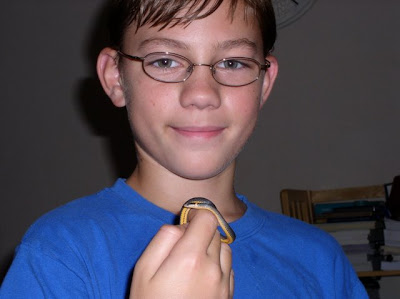
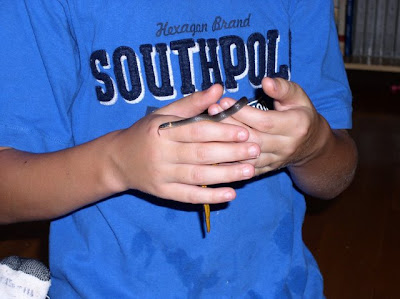
My brother sent pictures of what the hurricane recently did to their property in S. Georgia and after the storm his son found another cool snake, this time a pretty Ringneck Snake. I have said this before: storms bring out some of the coolest snakes. Stephen: Ringnecks don't drink V8 juice.

Thursday, August 21, 2008

Snake Killers


After visiting my brother's house in Santaquin, I decided to drive a canyon on the way back in hopes of finding a cool snake. This canyon normally has little or no traffic, but I forgot that the bow hunt had just started, so there were a lot of vehicles going in both directions. A lot of these "hunters" are a danger to themselves and everything within their range, so I thought it was best to stay in the car for the most part (I'm not into body piercing). The only snake I would find this night was a recently run-over Yellow Bellied Racer. The person who ran the snake over probably did it intentionally. The bright green is hard to miss and these snakes are almost always moving and the canyon road doesn't allow fast speeds in the area where the snake was killed. Anyone who thinks that they have done the world a favor by running over a snake is an uneducated idiot (that includes people that otherwise seem very intelligent). If it was possible to ask the millions that died in Europe of the plague whether they would have wanted snakes to control their rodent population, I'm sure the answer would be an emphatic "yes". Snakes are very important to the environment. It always disgusts me to see a snake killed on the road, but I guess its less traumatic than finding a person killed on the road. I will have to pick another canyon for my next snake hunt, but right now I can't think of one that won't be full of hunter traffic.

Saturday, August 16, 2008

Stephen's Snakes


My nephew has started doing some herping on his own in south Georgia. He found a nice looking Banded Water Snake. Finding a lot of cool snakes is a lot easier down in the SE. The last time I visited my older brother down there, I woke up to someone yelling "snake". That was music to my ears. There was a snake that was trying to come into the house (I wish I had that problem). The snake had already made its way past a screen door and would try to come into the house whenever the inside door was opened. It didn't seem to fear people much. That morning I walked around their property for about 2 hours and found 2 Gray Rat Snakes, a large Black Racer (the Racer lived in their barn and they saw it frequently), and some water snakes. Florida and Georgia just have so many species of snakes. My nephew found a Garter Snake when he came out here. He has a lot to learn about keeping snakes. They don't like potato chips or Dr.Pepper.

Wednesday, August 13, 2008

BC Herping

Another Rattlesnake.


This evening I had a few free hours, so I took my 2 sons and headed for Fort Canyon. I am not the only herper that visits this canyon. Every good hide rock has been rolled over and left that way. It is best to lift the rocks, check for snakes, and then lay the rock back exactly where it was. When we arrived at the starting point there were about 15 cars parked around the gated entrance and teenagers in swimsuits heading to and from the creek (this is very unusual for this canyon). I knew this would be a short outing because my younger son made me carry him. We went a different direction than the swimmers to increase our chances of finding snakes. We flipped some logs with no luck. Then we found a tiny Side-Blotched Lizard that my sons wanted me to catch for them to hold. After releasing the lizard, we walked around until I found an old galvanized pipe in some tall grass. I knew there would be snakes around/under that. I started to walk around the pipe and heard a loud rattlesnake rattle. When I approached the snake I should have had my camera out, because it quickly slithered under the pipe. It was a large Great Basin Rattlesnake with about 9 rattles and would have been cool to photo. It probably could have injured/smashed the snake to have rolled the pipe, so the snake was left alone. I might come back to this area later. This is about the 10th rattlesnake that I have found this season and they are beginning to seem to be one of the easier snakes to find. When we were leaving, a group of guys showed with cameras and dressed in hiking gear. They are probably the ones flipping all the rocks and leaving them flipped. Either that or they were there to take pictures of the teen aged girls swimming in the creek. I am hoping they were herpers.

Monday, August 11, 2008

In-House Snake Adventures


All of my snakes are escape artists. The snakes are cared for so well (better than I care for my own health) that you wouldn't think that they would ever try to escape, but that is just the nature of snakes. Their instincts prompt them to explore their world. About a year ago my Mexican Black Kingsnake was found to be out of its terrarium. I told my son not to tell his mom about this. The last thing I want my wife to know is that she has a 4 foot black snake loose in the house. That is her worst nightmare and it doesn't do much for my campaign to keep snakes as pets. My son and I frantically searched the basement until I found the snake behind the stereo system. The snake rattled his tail and was very defensive as if he was being collected from the wild. One of our baby Corn Snakes got out of a terrarium that was as tall as the snake was long. It should not have been able to get to the top, but I guess Corn Snakes are incredible climbers, just like they are said to be. The Corn Snake was later found when I was running hot water to thaw some frozen pinky mice and he came out of the sink. One day this past week I went down to do the usual inspections and maintenance and the first thing I noticed was that one of the clamps on the Arizona Mountain Kingsnake's cage was not down all the way (darn kids). I checked the cage and he was gone. This is bad. An Arizona Mountain Kingsnake (Pyromelana) is one of the most secretive snakes that I know of. They spend almost their entire lives hidden at the bottom of rock piles and almost never surface. If my captive bred Pyro is anything like his wild relatives, I might not see him again until next spring. For now I go down to the basement quickly at night and check around everywhere. I have tried to get my Dachshund to sniff out the snake, but everything in my basement probably smells like snakes. I might start leaving out some thawing mice to draw him out. For now, I feel pretty dumb going out to look for snakes when there is one that needs to be found in my house.

Friday, August 1, 2008

Tree Hugger or Herper?


My younger brother, my son, my nephew, and I hiked up to Silver Lake (UT). I turned over every rock and dead log on the way up looking for snakes. I trick people into going hiking with me and it turns out to be a snake hunt. We only managed to find 3 Wandering Garter Snakes. One of them appeared to be a gravid female or at least it was very lumpy. All 3 snakes were found within feet of the creek. I have found so many Wandering Garters lately, its like finding a penny on the ground. I sometimes don't even pick them up. Don't get me wrong, I like all snakes, its just that the Wandering Garters are so common here. Most Garter Snakes are brown (One local collection of Garters is pretty awesome because of the diversity). Maybe color is the reason that they are so common. Maybe they would be heavily collected and wouldn't be so common if they had more red or orange (note: at least one Garter subspecies with red is nearly extinct in the wild). It would be very difficult for anyone to know for sure how bad collection harms wild populations, but it is interesting that the dull-looking snakes with only browns or grays seem to be abundant. In Florida, Gray Rat Snakes are considerably more abundant than the closely related Red Rat Snake and their habits/habitat are nearly identical. Gray Rat Snakes (Oak Snakes, as they are called) are almost non-existent in the pet trade, while Red Rat Snakes (Corn Snakes) are the most common snake available in the pet trade. It should be said that there are more brown snakes that are diurnal (active during the day and hence, more visible) and that land development/habitat loss does more to eliminate snakes than collecting ever could, but the collection of snakes certainly cannot help. My wife's good friend called us one night last winter with news of a horrible snake crawling around in her basement. She was going to throw it out in the snow. I went over to find a young Garter Snake in surprisingly good health. I kept the snake until spring and then released it at a good spot near the Jordan River. Would I have kept the snake if it had brilliant colors? Maybe. Maybe not. Compared to my other snakes, the Garter Snake stunk because it ate fish and it also required more work. I was actually glad to see it go, but I hope it is doing well.

Wednesday, July 30, 2008

Badger Encounter


When I am out searching for snakes, I always stumble across a lot of other wildlife, none of which is nearly as interesting as snakes. This trip was no exception. I started out early in the morning hiking next to a creek north of Timberlakes (NE of Heber, UT). The bank on one side of the creek is very steep and in some areas it is a straight drop off with the roots of large trees hanging out exposed from erosion. I was looking for a reasonable place to cross the creek to make the hike a little easier and I found a large tree that had fallen across the creek, providing a bridge across the creek (well, almost). The tree was about 6 feet above the creek and was large enough to be sturdy, but small enough that I decided to crawl across on my hands and knees as there was nothing to hold onto. When I was about 1/2 way across the log, out of the corner of my eye I noticed something moving and turned to see a large badger running along the side of the creek that I was trying to cross over to. I was not in a good position to run (obviously) so I kept still and hoped that the badger would not see me and just go on its way. The next few seconds were really tense for me as I watched the badger run up to the other end of the log that I was on. I don't know if this is normal for a badger, but this one ran with its head looking/pointing straight down and had not seen me yet. It also could not hear me starting to move backwards on the log because of the noise of the rushing creek water below. I was hoping that it would smell me and run off scared. Instead, it began crossing the creek on the log that I was on. I realized that the badger was going to run right into me because of how unobservant it was. I have heard stories of how these animals can take down an elk. My heart was now pounding and not from the hike. I waved one of my arms hoping to get it to see me. It didn't. I then yelled as loud as I could (note: when I say yelled, I mean I screamed like a little girl. I am glad no one else was with me to witness this). The badger stopped where it was on the log. It finally looked up and saw me. It sniffed towards me. It was only about 5 feet away from me. It then turned around and trotted back in the same exact path that it had traveled to get to my log bridge. It looked back one time at me and then was out of sight. I sat on the log for a short time wondering if I should continue across and then I did cross the creek and resume my snake hunting and I was just very grateful that the badger was not a bear.


(Note: I was not able to get a picture of the badger so the pictures are just generic)


Sunday, July 27, 2008

Utah Beauty


Who could see the beautiful scenery in Utah and even consider living anywhere else? On a summer evening, just pick a canyon and go. This time we went up Diamond Fork to the Red Ledges area and brought some chicken dinner. The kids and their cousins had a great time (go figure). Getting out into nature increases my chances for finding snakes, so I had a good time as well. The Red Ledges have many different types of lizards crawling all over the rock formations. This attracts lizard-eating snakes, which attracts snake hunters like myself. I was finding dead snakes on the road. By the way, if you find a dead snake on the road and it is bright blue, that is not its natural color. Smooth Green Snakes turn blue after they die, because all of the yellow pigment quickly goes away after death (I have heard that the Yellow-Belly Racers do this also, but I'm not absolutely sure). As always, Garter Snakes were out in abundance. The creek was pretty and the kids had to spend some time throwing rocks into it (they can do this for hours). Good feelings always accompany our nature outings like this or at least I forget about stressful things for a while. Enough psychology talk: enjoy the photos.


Friday, July 25, 2008

THE ORANGE GROVE (circa 1981)

When I was young, my dad's dad owned a large citrus grove in central Florida near Moss Bluff. My brothers and I stayed at the grove quite often in the summertime. At the beginning of every trip to the grove we would go down to the big lake and flip over the boats and my grandad would shoot the venomous water moccasins (this seems futile because we would then swim in a moccasin infested lake right afterward). There were always large bullfrogs under the boats as well. I would wait until the shooting was done and then try to catch some of the frogs that were fleeing to the lake. The amount of wildlife at the grove was incredible. There were alligators, lizards, frogs, salamanders, opossums, armadillos, various birds, turtles, butterflies, raccoons, squirrels, and SNAKES. All my reptile collecting was "catch and release". This was mostly because we didn't know how to care for the snakes or lizards properly and their health would decline. Letting them go was easy because there were so many others to catch. I found so many different species of snakes that I don't remember them all. Even Indigo Snakes were somewhat common back then. One reptile that my grandad did keep for a while was a baby alligator. He insisted that I hold the thing. He tried to hand the gator to me. It had it's mouth open (we didn't know to tape it shut) and I jerked my hands away just as my grandad was letting go of the neck (I was supposed to grab it's neck). The little gator whipped around and latched on to my grandad's thumb. They say that even small alligators have a powerful bite and I think that is true, judging by all of the yelling and swearing from my grandad. I got brave and held the gator a while later. I thought it was really cool. The grove was a wildlife paradise. We always had a good time and we got to bring home a trunk full of the most delicious oranges available.

Thursday, July 24, 2008

100% Het. For Herper


Reptile/amphibian enthusiasts (herpers) can seem to speak their own language. The herp language is not that difficult to learn. Just memorize the scientific names of 10 or more snakes common to the pet trade and you can fit right in. Start with Elaphe Guttata Guttata (the corn snake). This is the snake most herpers start out with and every pet store in America has them, but you'll need to know how to recognize a sunglow motley zigzag freckled hypo Miami phase corn or you'll look stupid. Elaphe Guttata means "spotted deer", which makes you wonder how smart the scientists were that applied these names. Even non-herpers can tell the difference between a snake and a deer. The scientific name for Racer is "Coluber Constrictor". Whoever applied that scientific name never observed these snakes as they never constrict anything, they simply bite, hold on until the prey gives up, or swallow quickly if the initial strike is in the right place. Our local Great Basin Gophersnake has been given the scientific name "Deserticola", which sounds like the namers became thirsty out in Utah's west desert. If you find the "normal" phase of any snake to be appealing, keep it a secret or you'll end up looking even more stupid. Normal is not exotic and snakes are supposed to be exotic. If you like normal pets, go buy a dog. I know a person that thinks normal pueblan milk snakes are the prettiest of all snakes, but wouldn't admit it in certain company. Some snakes are distinguished from other similar looking snakes by the number of lower labial (bottom jaw) scales. Who would have ever thought to count those? Scale count knowledge isn't as important for impressing fellow herpers as it is for avoiding wildlife laws in some states. At reptile shows, any snake with the title "het" in its description will be more expensive. The word heterozygous simply means that an animal looks normal, but will have offspring that are predictably not normal. By this definition, we can all be considered heterozygous for something. When it comes to our own offspring, most of us hope we are 100% het for normal.

Saturday, July 19, 2008

Are all big brothers this mean?

The Black Racer snake is one of the first snakes that I ever caught in the wild. It is a very beautiful glossy black with a white chin. One characteristic of the Black Racer is that they are very defensive when you are trying to catch them. They will bite repeatedly and strike so fast that you don't have time to react. When you think that you have them, they actually have you. The best way to catch them is to follow them until they think they are camouflaged. They will then stay still and if you slowly approach them, you can pin them down with a flexible stick or something that won't injure them. Then grab them carefully behind the head. (note: Black Racers are listed with a top speed of 8 m.p.h., but my experience is that they can be much faster. At Alfred B. Maclay Gardens in Tallahassee I noticed a Black Racer's head standing up above the tall grass like a periscope. I started sprinting full speed toward the snake and thought for sure that I could catch it because it was in a large open field about 30 yards away from me. The snake, which was about 5 feet long, fled toward the woods. I was gaining on the snake, but not quickly enough because it beat me to the woods and disappeared into the thick vegetation. My estimation of the Racer's top speed is 14 m.p.h.) After you catch the crazy snakes, it is usually only a minute or two before it is calm enough to release the head hold. The snake will then have no interest in biting you. With wild-caught racers, you must go through the head hold/calming procedure every time you get them out of the cage or you can expect a vicious bite. One day my sister, who is a year younger, and her friend came to the back yard where I had about 20 Black Racers in a large cage (note: all of my snakes were released after a short time) and I was holding 2 of them. My sister had never taken one out of the cage and was not aware of the necessary calming procedure, but she wanted to show off one of the snakes to her friend. She asked if she could hold one. I said sure and then began to watch, knowing what would happen. She reached for the largest Black Racer in the cage and it immediately struck and bit her arm. She was shocked, hurt, and embarrassed in front of her friend. For some reason she didn't trust my snake advice after that. She still reminds me about that to this day, but she has forgiven me. Strangely, out of my 6 siblings, she is probably the only one that would have a pet reptile or hold a snake. I guess I will take credit for that.

Sunday, June 15, 2008

Snakeless in Omaha

With gas prices being so cheap, we decided to drive to Omaha, Nebraska to see my sister. Her husband goes to Creighton University. Also, our favorite college team made it to the college world series (I am from Tallahassee) and we thought it would be cool to see them play in one of the biggest events in college sports. Our team lost badly, but the college world series experience was something that I would recommend to anyone, sports fan or otherwise. It is an incredible event (pageant). When I first walked into Rosenblatt Stadium the evening before the game and saw the field, it looked like an extremely well-cared-for golf green. I could literally feel the history of college baseball all around me.
The stadium shares a parking lot with the Omaha Zoo so we hit the zoo as well. The Omaha Zoo is one of the best zoos we have ever visited. Every exhibit was amazing. Utah's Hogle Zoo just doesn't compare.
The two days before the game, which was on Saturday, we spent hanging out with my sister and her husband. They showed us around Omaha. I did not realize that the Missouri River separated Omaha from Iowa. We spent a lot of time around the river walk area. There had been tornados and severe weather the day before and there was a large amount of debris floating down the river, including whole trees. We looked for snakes (when I say we, I mean mostly me) and found some shedded snake skin, but no snakes. The next morning, my brother-in-law and I went snake hunting. He is not into snakes and may have been asked secretly by my wife to go with me to make sure that I did not get lost. My wife does things like that. I told my brother-in-law that we needed to go to a wooded area that had a stream and he suggested a place that he had been to. When we got there, I could tell that the area was probably too developed for finding snakes, but there was a creek and woods like I had asked for and we had limited time, so off we went. My brother-in-law kept asking questions about what I was doing as I broke apart rotten logs and lifted rocks. I gave him a nature lesson as far as I knew how. He seemed a little concerned when we came to a large tree that had had the bark stripped off it up to about 7 feet. This tree was in the middle of some dense vegetation and it looked like we might have been the first people to have gotten that far into that area of the woods, at least for some time. I told him that I didn't see any bear claw marks on the tree and that seemed to ease his mind. We searched the entire area. I then asked an old man who was trimming some weeds near the beginning of the jog path if he had seen any snakes. He asked if I was really looking for snakes, like I was kidding him or something. It turned out that two women had seen a 6-foot snake (likely a Gopher Snake)near where we were looking the day before. I asked him what time of day they had seen it and he said about 10:30am. It wasn't even 8:00am when we were searching, but that news really gave me some encouragement. We then walked around searching carefully until I could tell that my brother-in-law became certain about my insanity. It would have been so nice to have found a milksnake or something, but in a way I usually hope not to find a snake that is too cool. That is because I will then have to talk my wife into letting me keep it. She has actually tried to get me to sign a contract stating that I will not under any circumstance acquire any more reptiles, amphibians, birds, fish, etc., etc. I have refused to sign the contract to this point and have chosen to negotiate in other ways.
On the way back from Omaha I saw a lot of places that would be sure to yield snakes, but I just couldn't bring myself to ask my wife to wait while I disappeared into the woods only to return with the something she hates most in the world. We must have a really good working relationship to put aside differences like we have.


Sunday, June 1, 2008

Rattlesnake No-No's in Corner Canyon


So, finally a warm day this month on my day off. Utah is famous for delayed spring or intermittent spring. I got up just after sunrise and started to get ready for the hike. My son woke up and wanted to come with me. He is seven. I usually don't take anyone with me because I can get into some crazy stuff sometimes. Taking one of my kids allows me to spend time with them and that is fun, but it does limit the hike. When my son and I got to the starting point of the hike, we looked around before just taking off. There is a creek that comes cascading out of granite rock formations that is totally awesome. The first part of the hike is through the rock formations. The horizontal morning sunlight was incredible the way it detailed the terrain (this happens nearly every day while I'm stuck at work). No artist could completely capture the way the vegetation just grows off ledges. The grain and angles of the rocks are pure sculpture. Most people that have lived in Utah for a while quit noticing this kind of beauty. I try not to let this happen.


We started up the canyon on the west side of the creek and within 15 minutes we came across a young Rattlesnake. It was about 17 inches long and probably 1.5 years old. This was a pretty little snake, but still a venomous snake. Also, all pit vipers are illegal to collect in Utah. We left it in the same spot and continued up the creek. About five minutes later we found another Great Basin Rattlesnake that was at the base of a huge boulder.

It was about 4 feet long and was thick. Just looking at the snake made us uncomfortable, because we were in an area where we had to place our hands and feet over and around rocks that could easily hide numerous snakes. I wanted to hear the snake's rattle so I got a stick and started to move the snake with it (note: this is stupid-never do it). It took a few minutes to get the snake irritated enough to rattle. When it did begin rattling, it sounded more like a buzz. At this point my son told me he wanted to go home. I told him to never go near a rattle snake. I know that I'm a bad example, but at least I didn't pick the snake up. My son told me that he was really scared and wanted to get out of there and I didn't realize that I was also a little scared until I took a couple steps back from the boulder and a sharp scrub brush stuck the back of my leg. I nearly jumped out of my pants. We left the area. On the way back, I caught a couple of Western Fence Lizards and Side-Blotched Lizards for my son. This made him feel a little better about the outing because he loves to hold lizards (we have had lizards as pets). When you turn the male lizards over on their backs, their bright blue bellies can be seen. I have no idea why so much color is hidden in a spot that is almost never seen. Fence lizards' backs are just gray or brown with arrow shaped patterns. One of the lizards was attempting to catch flies when I caught it, so I thought I would help it out and catch it a fly. It had its mouth open to bite me and I put the fly in it but it spit it out (ungrateful reptile). After messing around by the lower creek area and rolling logs over (my son loves to see the large ants, beetles, etc.) we headed home. While we didn't have the greatest success finding the target snakes this time, the outing was a great success. This was the most that I had talked to my son one-on-one in some time and we will probably remember this for a long while. Time spent with family can be very precious.

Tuesday, April 8, 2008

Warning: Snakes May Cause Marital Stress

I can't explain why, but looking for snakes in the wild is one of my most favorite things to do. I think that I would rather find a cool snake or other reptile when I am hiking than a gold nugget. For me hiking is usually just a bi-product of my searches for snakes. I have tried to figure out why I have this obsession (so has my wife) but I haven't been able to yet. I just know that I like to be around other herpers because it makes me feel normal. I currently have 6 snakes. This is 6 snakes too many for my wife. She has never held one. She gave me a limit of 4 snakes and said that if I get any more, I would have to choose between the snakes and her. She is just lucky that I am not fond of burmese pythons, which can get to be more than 20 feet long. All of my snakes except 1 have been purchased and not taken from the wild. I usually release the snakes I catch in the same spot that I caught them, but some snakes are more difficult to release than others. It would be a dream for me to visit SW Texas and find an alterna (Gray-banded Kingsnake) even though they can be bought under $100 locally. I guess this is the equivalent of a fly-fisherman spending a lot of time and money to catch something that could have been purchased cheaply at the local supermarket.
So far this year, I have caught a variety of snakes. Wandering Garter Snakes and Black Headed Garter Snakes are so common around here that it would be unusual to not find them in most areas. I have found them in the valleys and also high up in the mountains. At Payson Lakes, UT 2 days ago I found a Wandering Garter Snake at an elevation of about 8,000 feet. Gopher snakes are also very common around here. Almost every time I go 4-wheeling in the summer, I find them. Last week when riding bikes up the canyon we happened upon a 3 ft long Gopher Snake (they can grow over 6 ft). It hissed at us when I picked it up. Some people call this snake a blow snake because of the hissing characteristic. Gopher Snakes make good pets because they almost always eat well in captivity and calm down easily. Even this hissing Gopher Snake calmed down enough to release the neck after just seconds and didn't try to bite. I have only been bitten by 1 adult gopher snake and I have handled many. They just need to be given assurance that they are safe. A few weeks ago I caught 2 Western Yellow Belly Racers. These are beautiful snakes (some field herpers scoff at Racers, but I like them). After catching the second Racer, I rolled over a rotten log and found some young mice. I grabbed 3 of them and put them into the same bag as the Racer. It immediately latched on to one of the mice and began swallowing. (Captive care note: if you ever have a snake that is determined not to eat, catch a wild mouse in an area away from farms and pesticides. Stun the mouse by shaking it hard in a container and use it to rub scent on store bought frozen/thawed mice. Scenting may require killing the wild mouse and cutting it open. This seems mean, but it may save your snake because the wild scent is almost irresistible) The Racers were later released in the same area. Racer is a good name for this snake. They are very fast when they are warmed up.