Wednesday, September 8, 2010

Canyon Tree Frog Behavior:

This is a canyon tree frog exactly as we found it on a warm, nearly vertical canyon wall.

The canyon tree frog exactly matches it's surroundings because it is covered in the same sand that is also covering the rock. Is the frog intelligent enough to camouflage itself by rolling around in the sand, or does the frog's natural behavior just provide this perfect sand camouflage without the frog even realizing it?

The canyon tree frog looked much cooler after my neice poured some creek water on it and revealed it's spotted pattern.

We found a lot of red spotted toads in the same area. There were also leopard frogs in the same area, but to get photos of more than just their eyes and noses with horrible reflections, I would have had to damage some habitat.

Toads do not ever have to submerge in water to keep their skin healthy. They have super absorbant skin on their rear-ends that can absorb any little bit of moisture that they sit on.

A couple tiny toads that recently transitioned from water to land:

This is a chorus frog. These are the frogs that are often heard and seldom seen. They are classified as tree frogs, but are usually found at the edge of bodies of water

I have found that chorus frogs are very calm and will eat moving insects right out of your hand. This one is a female:

A light rain brought out hundreds (maybe thousands) of tiger salamanders on this night. The road was turning gray in one area with salamander guts because so many were getting smashed. My son and a friend jumped out to save some, but it was a futile effort because more were coming onto the road than could be removed. Stopping on the road nearly got us hit and also attracted a sheriff's deputy, who questioned us for a while. I explained about the salamanders and the gray salamander guts all over his tires and what that nasty popping noise was as he was unknowingly running over so many salamanders. He took my license, ran our plates, and then told us to get out of the road. I took a few shots before he made us leave:

Another shot of the same group of live ones:

This one was really cool looking:

The large one in this shot is albino:

Seeing hundreds of tiger salamanders smashed in the road like that was horrible.

Tuesday, July 20, 2010

Western Toads

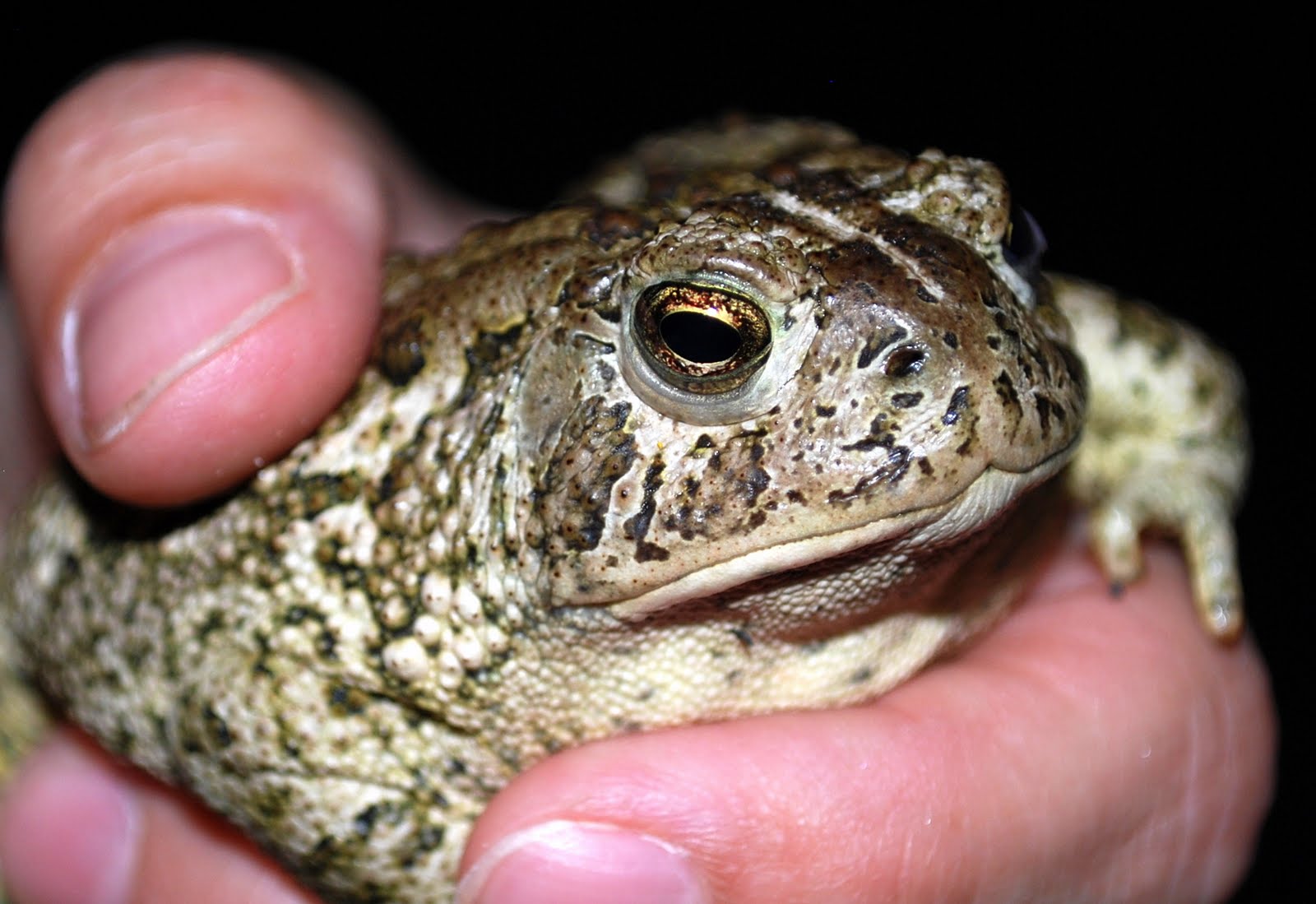
Toads are really cool creatures. They're a lot less slimy than frogs, but they seem to have a never-ending supply of pee when you pick them up. A close-up shot of a western toad reveals some cool markings. The black and gold pattern in their eyes is awesome.

A light rain while road cruising brought out dozens of these, even in areas far away from any body of water.

The toads were content to sit on hands.

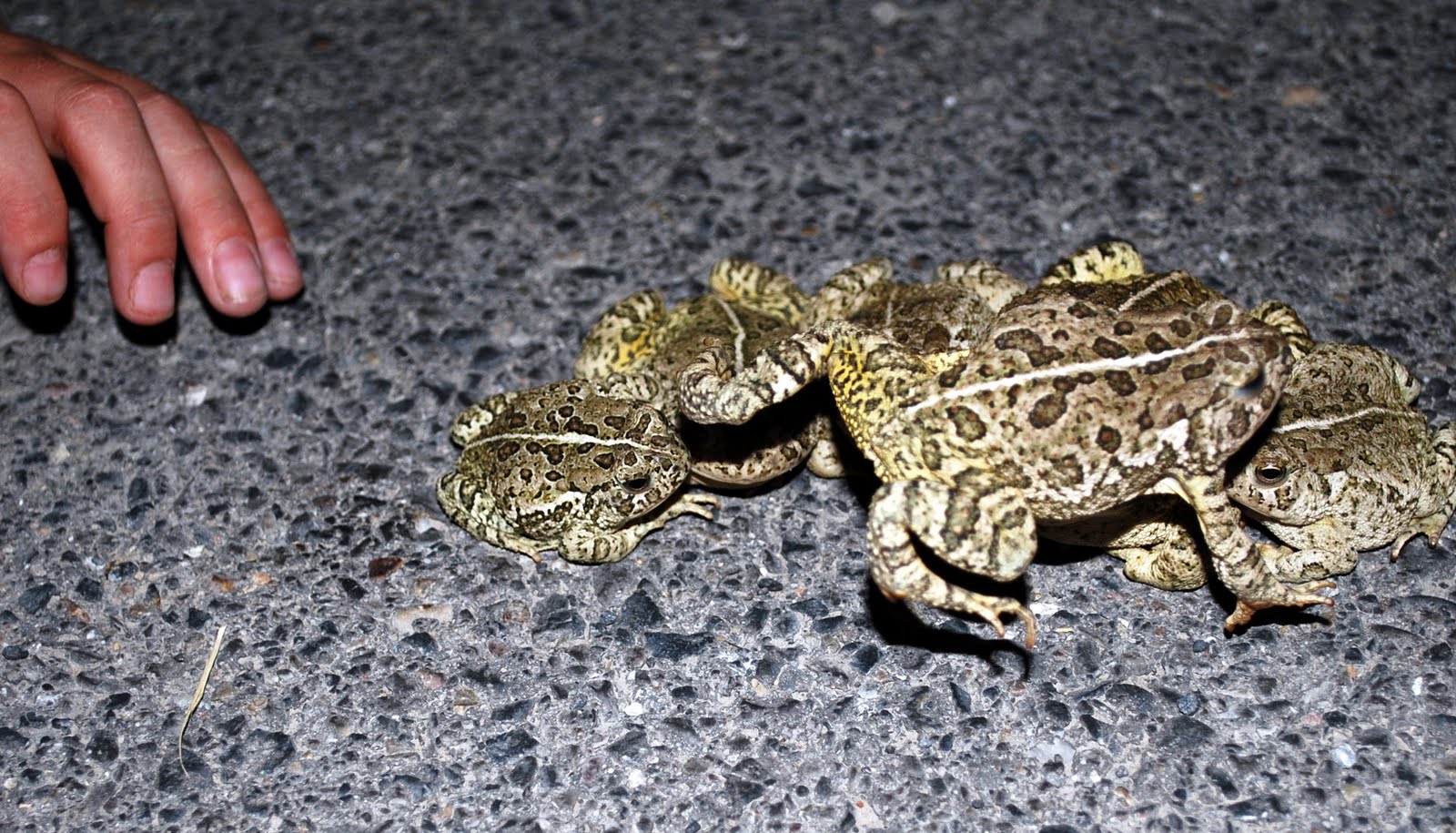
A group photo was a lot trickier:


We found a lot of cool things this night, but the toads were the most entertaining to my son.


Let me get back to the bugs.


Toads don't really give you warts.


Getting 2 toads to pose isn't too difficult.


Three requires a little work.


Six active toads was as many as I could try to photo.


Monday, June 14, 2010

Gopher Snakes in Rock Piles

A common but spectacular sight in Utah Valley:

We tried our luck with some rock piles:

The cactus flowers were worth a look:

In each of the many

colors:

This was a breeding pair of gopher snakes. They were copulating when found and then decided to take off in different directions when they saw us. Both of these gopher snakes were about 5 feet long.

Judging by their huge heads, these were really old gopher snakes. The male, being held on the right, had girth like a python.

Another pose with the well-fed couple:

We made sure they escaped in the same direction:

Both didn't quite fit in this hiding spot:

Some of the scenery. We also observed a juvenile hawk being chased away from a high cliff nest repeatedly. It was complaining loudly and kept trying to return to the nest, which probably had this year's chicks in it. We were fortunate to have found any snakes in this small canyon with a hawks' nest overlooking almost every part of the rock slides.

This is the first bat that I have ever flipped. It literally scared the pee out of it:

The bat made some of the most unusual noises that I have ever heard. I thought that bats hung out in groups and in caves.

I put the thing back by the bark to allow it to climb back in and it gave us a bat farewell.

We stumbled upon 2 fawns:

These fawns froze and wouldn't move a muscle:

The fawns wouldn't even flee when approached:

It was cool to be able to pet wild fawns, but

then we wondered if the mom would abandon them because of our scent.

Tuesday, June 1, 2010

Great Basin Gopher Snakes

Most people that have spent time outdoors in Utah have seen gopher snakes. They are pretty hard to miss, especially in the spring. I never get tired of seeing gopher snakes.

Gopher snakes are easily the best-looking of all snakes with keeled scales. They are better looking than most smooth-scaled snakes. The eye stripes are awesome.

Most gopher snakes make great pets and eat pre-killed mice without trouble.

Gopher snakes and a sage lizard:

Gopher snakes are said to grow to over 6 feet, but I haven't found many that are even 5 feet in length. I have found large skin sheds, but the skin can stretch during the shed, so that is not an accurate representation of length. Adult gopher snake length doesn't come close to adult gray rat snakes, but gophers are much more handsome.

Like I said, they're pretty tame for a wild snake:

A niece who loves to pick up reptiles:

A nephew who likes to taste reptiles:

Where did that fence lizard come from?

A big dark one:

with a black and white yearling:

There were quite a few heavy-laden female fence lizards on the rocks where we unloaded the 4-wheelers:

Plenty of gopher snakes to go around.

I like the ones where the black turns to rusty brown:

One of these had pretty bright yellow:

A small fence lizard: